

BUYING A HOUSE IN SPAIN AS A FOREIGNER GUIDE
You Can Own Property in Spain. You Probably Don't Need What You Think You Need.
No residency required. No Spanish income required.
Foreign buyers can purchase property and access
mortgage financing in Spain right now.
Here is what that actually looks like.
Most people looking at property in Spain assume they're locked out.
They think you need to already live here. Or have a Spanish salary. Or go through a process so complicated it barely seems worth starting.
None of that is true.
Spain is one of the most open property markets in Europe for foreign buyers. Approximately 140,000 foreigners purchased property here in 2024 — 20% of all transactions in the country. Americans and Filipinos are part of that number. Non-residents can access mortgage financing up to 70% of the purchase price from Spanish banks.
The process is different from what you know at home. But different is not the same as difficult — and the gap between what people assume and what is actually possible is worth understanding before you write this off.
WHAT THIS PAGE COVERS
What you actually need to know before buying property in Spain
Whether you are thinking about a place to live, an investment, or something between the two — this page covers the real mechanics. The costs nobody mentions upfront. The mortgage rules for non-residents. The contracts that can cost you money if you sign them in the wrong order. And the three things that can move you forward right now, depending on where you are in the process.
THE MARKET — WHY NOW MATTERS
What is happening in Spain's property market right now
Spain added approximately 180,000 new households in 2025. Construction delivered around 90,000 to 100,000 new homes. That gap between how many families need housing and how many homes get built is the structural reason prices have kept climbing — and analysts at BBVA Research and CaixaBank both project continued growth of 5–10% through 2026 and 2027.
The Euribor rate that governs most Spanish variable mortgages is sitting around 2.2%. For anyone coming from the US where mortgage rates have been at 6% or higher, that number tells a different story about what monthly repayments look like here.
The housing deficit across Spain is estimated at over 600,000 units. There is no indication that supply will catch up with demand in the short term. Prices in prime municipalities — Valencia, Málaga, Alicante, the Balearics — have been outpacing national averages.
This is not a call to rush. It is context. If you have been sitting on this idea, the data is worth reading before you decide.
20% of all Spanish property sales in 2024 went to foreign buyers
Prices rose 12.8% year-on-year in 2025 — the sharpest increase in 18 years
Euribor at ~2.2% — far below current US mortgage rates
THE REAL COST OF BUYING
What buying property in Spain actually costs — the number that surprises most people
The listing price is not your total cost.
When you buy a resale property in Spain, you pay ITP — the property transfer tax — on top of the purchase price. This ranges from 6% to 10% depending on the region, and it is due at closing, paid in a lump sum. Not annually. Not spread over time. On the day you sign.
When you buy new construction, you pay IVA instead — fixed at 10% across all regions.
On top of that, budget for notary fees, Land Registry fees, and if you use a lawyer — which you should — legal fees of around 1% of the purchase price.
The total cash you need to have ready:
Down payment (non-resident): 30% of purchase price
Property transfer tax or IVA: 6–10% (resale) or 10% (new build)
Notary + registry + legal: approximately 2–3%
Total: plan for 36% to 42% of the purchase price in cash before you start
This is the number most people do not account for when they first start looking. A €300,000 apartment requires roughly €108,000 to €126,000 in cash on top of the mortgage.
THE MORTGAGE SECTION
Can you get a mortgage in Spain as a foreigner?
Yes. Spanish banks offer mortgages to non-residents. Here is how it works.
Non-residents — people who do not live or pay taxes in Spain — can borrow up to 70% of the purchase price. The mortgage term is capped at 25 years for most non-resident applicants, and some banks apply an age limit requiring the loan to be fully repaid by the time you turn 75.
Residents — people who have been paying taxes in Spain for at least one year — access better terms. Up to 80% financing, terms of up to 30 years, and in most cases lower interest rates.
The banks will ask where your down payment came from. They want to see savings, business income, or a documented gift — not equity pulled from another property. They will ask for proof of income, tax returns, a full list of existing debts, and confirmation that your mortgage payments will not exceed 35% of your net monthly income. They will find any discrepancies.
The most important thing most people do not know:
In Spain, when you decide to buy a property, you sign a contract called the contrato de arras. You pay 10% of the purchase price, and the property comes off the market. If your financing then falls through, you lose that 10%. Not getting approved for a mortgage is not considered a valid reason to get your deposit back.
Get pre-approved before you start seriously viewing properties. The process takes approximately ten minutes of paperwork on your end. There is no reason not to do it first.
WHAT YOU NEED BEFORE YOU CAN BUY
The three things you need in place before any transaction can happen
The NIE — the Número de Identificación de Extranjero — is a tax identification number for foreigners. Every property transaction, tax payment, and banking interaction in Spain requires one. You can apply at a Spanish consulate in the US or Philippines, or in person in Spain. Processing takes several weeks, so start early.
A Spanish bank account — not strictly required by law, but practically essential. It is where your mortgage payments will come from, where your closing costs will be transferred, and where ongoing costs like community fees and local taxes will be charged. Most major Spanish banks now allow remote applications with video verification.
An independent property lawyer — not the developer's lawyer, not the real estate agent's lawyer. Your own. In Spain, the notary who witnesses the final deed is neutral — they confirm identity and legality but do not investigate the property's history. That is your lawyer's job. They check for hidden debts attached to the property, verify the Nota Simple from the Land Registry, confirm the property has no illegal structures, and review every contract before you sign it.
One rule worth knowing: in Spain, outstanding debts — unpaid community fees, IBI taxes owed by the previous owner — attach to the property, not to the person. If your lawyer does not check for these before you sign, they become your problem.
THE THREE PATHS SECTION
Where do you want to go from here?
Depending on where you are in this process, one of three things will move you forward most.
You haven't chosen a city yet
Before you look at a single property listing — know which city you are looking in
Spain has 50 cities and towns worth serious consideration for foreigners. They are dramatically different from each other in cost of living, climate, culture, expat infrastructure, and what daily life actually feels like.
A two-bedroom apartment in Valencia costs a different amount from the same apartment in Marbella. The lifestyle in Bilbao is a different experience from the lifestyle in Alicante. Making a property decision before you understand those differences costs you money.
Spain City Guide 50 cities across four categories — the most established expat cities, the best mid-sized options, smaller towns with real character, and places most people haven't heard about yet but should.
Written from real experience living in Spain — not a travel guide, not a sponsored list.
You are ready to talk financing
The mortgage conversation is the one to have before anything else
Pre-approval costs you nothing and takes about ten minutes of paperwork. It tells you exactly what you qualify for, which banks are the right fit for your income and nationality, and whether any complications in your financial picture need to be addressed before you start making offers.
Signing a reservation contract without it is how people lose their 10% deposit.
Mirelle Leguia — Mortgage Specialist for Foreign Buyers Licensed mortgage advisor working specifically with international buyers — Americans, Filipinos, non-residents, and people whose income is in dollars. Works with 30 banks simultaneously to find the terms that fit your situation.
"We send people to Mirelle because she answers the question directly and doesn't make you feel like you need to already understand the system."
You are looking at new builds or investment
New construction in Spain has a different process — and different numbers
The tax structure is different. The contracts are different. The timeline is different. And for investment buyers thinking about rental income, the licensing situation adds another layer that is worth understanding before you commit.
My Blue Bricks — New Development for Foreign Buyers Specialists in new construction and off-plan purchases for international buyers across Spain. They work with the real paperwork, the real process, and the real questions that foreign buyers have that domestic buyers do not.
FAQS
The questions people ask most
No. There are no residency requirements to purchase property in Spain. Foreign nationals from any country can buy freely, with the same ownership rights as Spanish citizens. You need an NIE and in practice a Spanish bank account — but you do not need to live here first.
Yes, but the process is more involved than for euro-income earners. Spanish banks will assess your income, tax returns, and debt levels regardless of the currency. Some banks are significantly more experienced with dollar-income buyers than others — which is one reason working with a specialist who knows which banks to approach matters.
It is the reservation contract you sign when you decide to buy a specific property. You pay 10% of the purchase price upfront. The property comes off the market. If the deal falls through because your financing was not approved, you lose that 10%. This is why pre-approval before you start seriously viewing is not optional — it is the thing that protects your deposit.
ITP is the property transfer tax on resale properties. It ranges from 6% to 10% depending on which region of Spain you are buying in, paid at closing. IVA applies to new-build properties and is fixed at 10% everywhere. Which one you pay depends entirely on whether the property is new construction or previously owned.
No. The Golden Visa program that linked a €500,000 property purchase to residency was cancelled in April 2025. Buying property does not give you the right to live in Spain. Residency requires a separate visa application — the Non-Lucrative Visa, the Digital Nomad Visa, or another qualifying route. Owning property does strengthen a visa application by establishing ties to the country, but it is not the legal basis for a permit.
From starting your property search to signing the final deed at the notary, most foreign buyers should plan for three to six months. The NIE alone can take several weeks. Legal due diligence on the property takes time. Mortgage approval for non-residents takes longer than for residents. Starting these processes in parallel rather than in sequence is how you avoid unnecessary delays.
Three ways to move forward
Choosing a city 50 cities. Honest assessments. Written from real experience.
[Continue to the Spain City Guide →]
Understanding financing Ten minutes of paperwork now saves your 10% deposit later.
[Continue Talking to Mirelle →]
Looking at new builds The process is different. The numbers are different. Start that conversation here.
WHO WE ARE
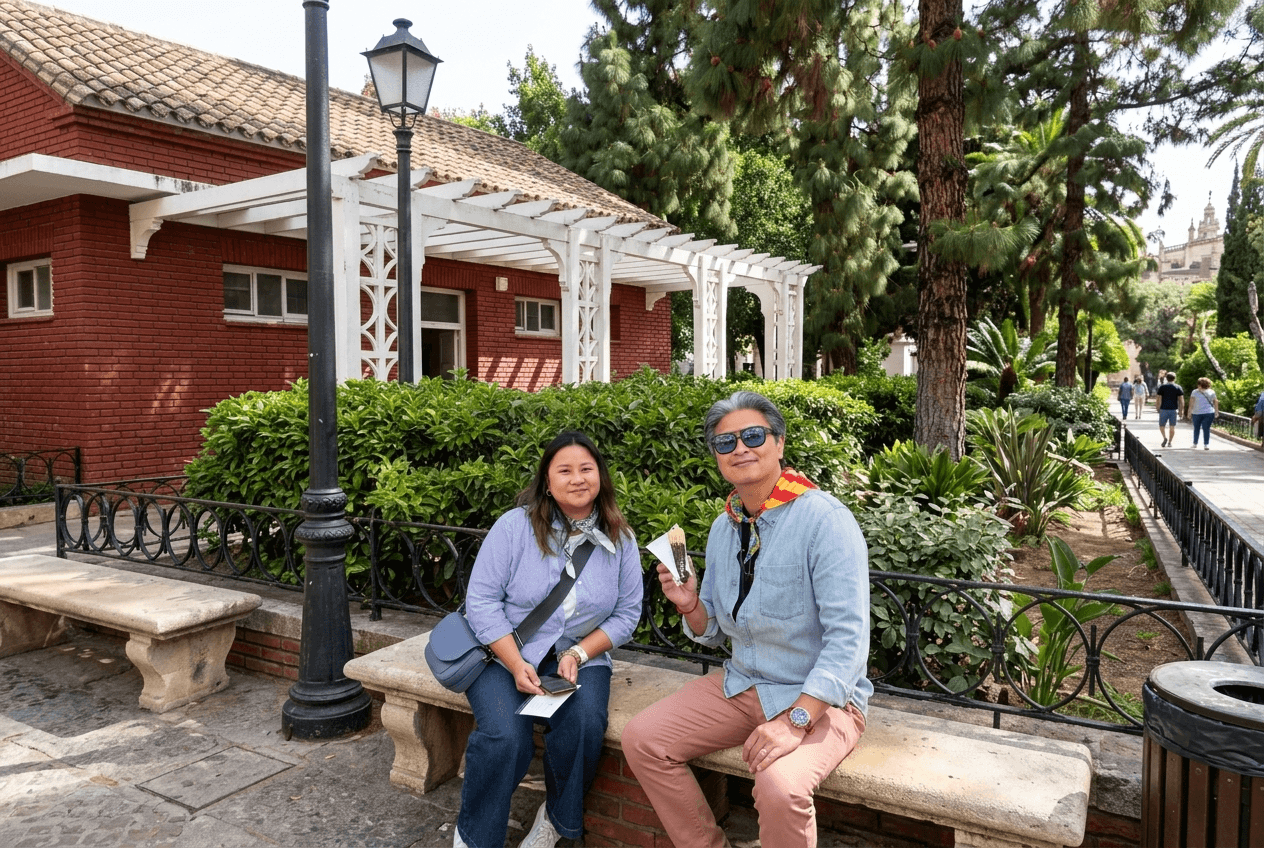
We are Paul and Bea. We are Filipinos who spent 13 years in Southern California before selling everything and moving to Valencia without ever having visited Europe. Two years later, we were Spanish citizens.
We are currently in the middle of figuring out how to buy property here ourselves — and we share everything we learn as we go. The professionals on this page are the ones we have found through that research and trust enough to send people to.
We are not lawyers, mortgage advisors, or real estate agents. For anything specific to your situation, speak to a licensed professional.

Helping everyone move to Spain — with courses, consultation, and real first-hand experience from Valencia.



Join our newsletter
© 2026 Everything is Boffo. All rights reserved.
*Some links may be affiliate links. Using them helps support us at no extra cost to you.
Access the Buying a House in Spain as a Foreigner Guide
Enter your email below to access this free guide. If you're new here, you'll also receive the FREE Spain Starter Kit!
No spam. Just practical guidance to help you move forward.
Send a message directly to Mirelle
We HATE spam. Your email address is 100% secure