
Getting a Mortgage in Spain as a Foreigner: What Nobody Tells You
Disclosure: This article contains affiliate links. If you use these links, we may earn a commission at no additional cost to you. This helps support Everything Is Boffo and allows us to continue creating free content about life, property, and finance in Spain.
Can You Actually Get a Mortgage in Spain as a Foreigner? Here's What Nobody Tells You
We've had a lot of conversations with people who are ready to buy property in Spain — they've done the research, they've visited the city, they know what they want. And then the questions start pouring in: Can I even get a mortgage here? Do I need to be a resident first? What about the down payment? Why is nobody talking about this?
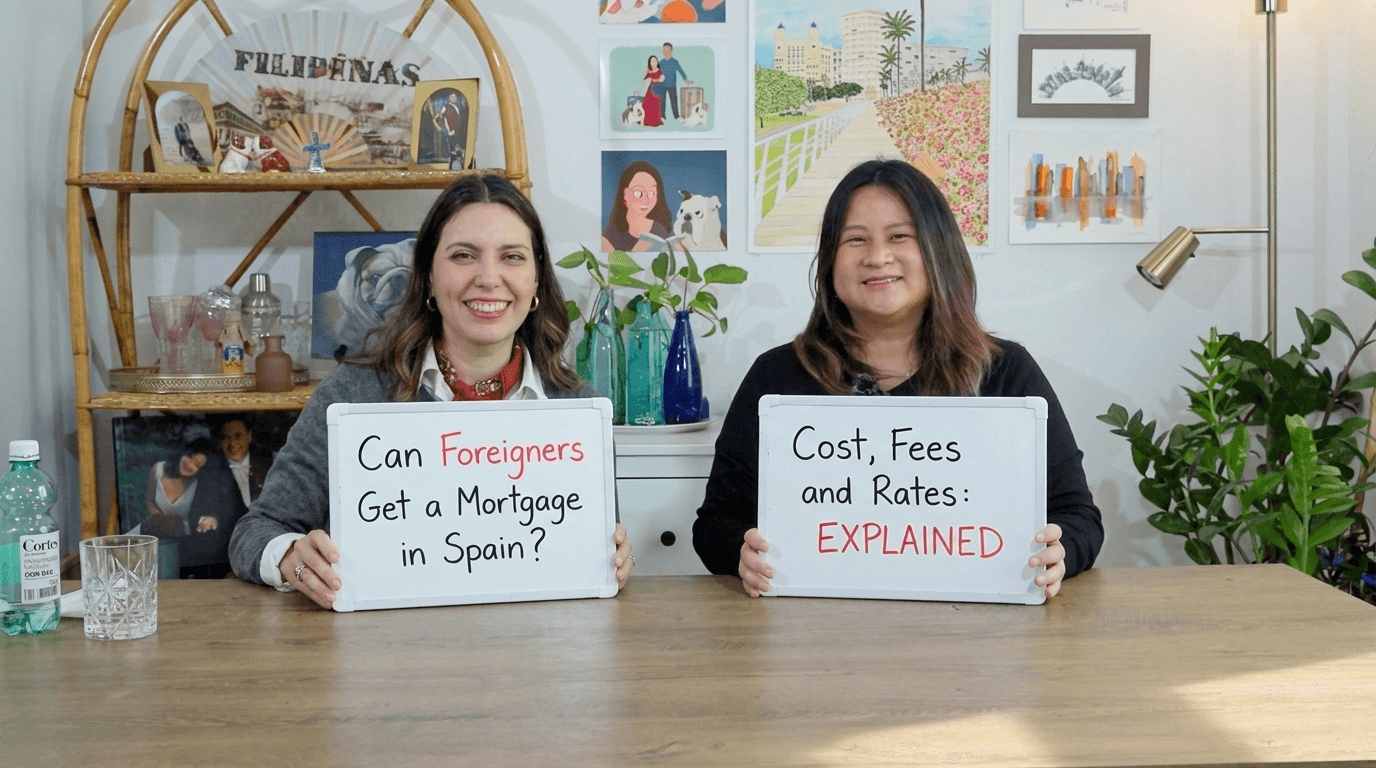
So we filmed an entire video with Mirelle Leguia, a licensed mortgage advisor who moved from the US to Spain five years ago with her family — and now helps foreigners navigate the Spanish property market. She flew in from Mallorca just to sit down with us in Valencia and walk through all of it.
If you're thinking about buying in Spain — whether to live, to invest, or to have a home base while you travel — this post covers the things that matter most. And yes, the full video is linked at the bottom. Watch it. Mirelle goes into way more detail than we can fit here.
Yes, You Can Get a Mortgage in Spain — Even as a Non-Resident
This is the first thing Mirelle said, and it's the thing that surprises most people.
You do not need to live in Spain, work in Spain, or have Spanish residency to qualify for a mortgage here. Americans, Canadians, Filipinos living abroad — if you meet the financial requirements, the door is open.
That said, there are different rules depending on whether you're classified as a resident or a non-resident.
As a non-resident, here's what you're working with:
Up to 70% financing on a primary property
Up to 60% financing on a second property or commercial loan
Maximum loan term of 25 years (some banks cap at 20)
Age limits apply — some banks cap at 75, others at 80. So if you're 70 years old and the bank allows up to age 80, you can only get a 10-year mortgage.
As a resident (generally after one year of paying taxes in Spain), the terms get better: up to 80% financing, 30-year terms, and often lower interest rates.
There's a catch Mirelle flagged that's worth paying attention to: if most of your income is coming from outside Spain, some banks will still classify you as a non-resident even if you've been living here and paying taxes for a year. Non-euro earners — people making income in USD, CAD, or other currencies — often get variable-rate-only offers or lower LTV caps depending on the bank. It varies, and it's worth knowing before you walk into any bank on your own.
The ITP vs. IVA Question (And Why It Matters)
When you're buying property in Spain, which tax you pay depends on what you're buying:
ITP (Impuesto de Transmisiones Patrimoniales) — paid on resale/secondhand properties. Ranges from 6% to 10% depending on the region. Some areas have progressive rates that go higher on multi-million euro properties.
IVA — paid on new construction, always at 10%.
Your mortgage broker will calculate which applies to your specific purchase and build it into your full cost estimate so you know exactly how much cash you need on closing day.
The Debt-to-Income Ratio Is Stricter Here
Spanish banks look at your net income — after taxes — not gross. And they apply a stricter debt-to-income ratio than most US lenders. Mirelle described it this way: the US is more flexible on how high that ratio can go. Spain is more conservative, and there are fewer creative mortgage products available.
There is one exception worth mentioning: a government-backed mortgage program for younger buyers (up to age 30 in most areas, up to 40 in places like Mallorca) that relaxes the DTI rules and sometimes eliminates the down payment requirement entirely. It's for residents only, and there are price caps on the property. But if you're a younger person with residency and a lower income, it's worth asking about.
For everyone else — especially if you own a business and write off significant expenses — there's a real-world issue to plan around. On paper, your taxable income may look much lower than what your business actually generates. Some banks will take a closer look at company financials and use the business as additional security if you bring it upfront and explain the situation. This is exactly the kind of thing a mortgage broker can help you navigate.
Why Getting Pre-Approved Before You Shop Is Non-Negotiable
Here's a detail that's easy to miss — and it's one of the more expensive mistakes you can make in the Spanish buying process.
When you find a property you want to buy in Spain, the standard step is to sign a contrato de arras — a reservation contract — and put down 10% of the purchase price. This takes the property off the market while you finalize financing.
What most people don't realize: not getting approved for a mortgage does not get you out of that contract. If the bank says no and you don't have a separate clause protecting you, you can lose that 10% deposit. No exceptions.
Mirelle's advice — and we think it's solid — is to get a pre-approval before you even start seriously touring properties. You fill out a form (she said it takes about ten minutes), they run your numbers, and you get a realistic picture of what you qualify for. That way, when you find the right place and sign the arras, you already know where you stand.
Working with a Mortgage Broker vs. Going Directly to a Bank
Mirelle works with about 30 different banks. Her team knows which ones work well with international clients, which have the most competitive rates for non-euro earners, and which ones to avoid for specific situations.
She gave a concrete example: a client bought an apartment in Málaga through her. His business partner — similar financial profile, similar income — went directly to a bank and got offered a higher interest rate. When the partner came to Mirelle and went through her, he got a better rate than his friend had. The bank even told him directly: if you want the same rate, go through them.
On a 30-year mortgage, a 1% difference in interest rate is a significant amount of money.
Her fee structure: an upfront admin fee of €995 (refunded if pre-approval isn't achieved, assuming accurate information was provided), and a success fee of approximately 0.75% of the mortgage amount, paid in cash when the bank gives final approval. The broker fees are documented as a cost of purchase, which means they can factor into your capital gains calculation if you sell the property later.
The 2% That Doesn't Get Approved — And What You Can Do About It
Mirelle mentioned a 98% approval rate for clients she takes on. We asked about the other 2%.
Her answer was direct: most of the time, people who don't get approved had something in their financial picture they didn't share upfront. A property they didn't mention. A debt that appeared on a credit report. A business detail that changed the picture entirely.
The banks will find out. They pull credit reports. They ask for divorce settlements, child support documents, business ownership records. If they start finding things you didn't disclose, the trust is gone — and so is the loan.
The practical advice: tell your broker everything. All of it. The good and the complicated. That's how they figure out the best bank for your specific situation, how they frame your case, and how they get in front of any questions before the bank asks them.
Interest Rates Right Now — One More Reason Spain Makes Sense as an Investment
Mirelle mentioned current fixed mortgage rates around 2.5%, though it varies by profile and bank. When you compare that to US or Canadian rates, which have been sitting at 6% or higher, the difference in what you can afford and what you can earn on a rental property is substantial.
She had a client buying an apartment near Marbella for around €900,000. The property already had a short-term rental license and was generating approximately €70,000 per year in rental income. Roughly half covered the mortgage payment. The other half went in the client's pocket — and that includes some weeks reserved for personal use.
If you're thinking about Spain not just as a place to live but as a place to invest, the math right now is genuinely worth running.
Watch the Full Video — And Get in Touch with Mirelle
We covered a lot here, but the video goes deeper on things like the buying timeline, what documents non-residents need, how the process works step by step, and more of Mirelle's real client stories.
Watch it here: youtu.be/O3ue6a58M7M
If you want to connect with Mirelle directly email here at mirelle@thespanishnest.com, you can find her on Instagram at @the_spanish_nest. Send her a message and let her know you found out about her through our video — she's happy to help you figure out where you stand.
Disclaimer
The information provided in this article is for general informational and educational purposes only and should not be considered financial, mortgage, legal, tax, or investment advice.
Mortgage products, lending criteria, interest rates, government regulations, and property purchasing requirements in Spain can change at any time and may vary depending on your nationality, residency status, financial circumstances, and the lender involved. While we strive to keep our content accurate and up to date, we make no representations or warranties regarding the completeness, accuracy, reliability, or suitability of any information contained in this article.
Before making any financial or property-related decisions, you should seek advice from qualified mortgage brokers, financial advisors, lawyers, tax professionals, or other licensed experts who can assess your individual circumstances.
Affiliate Disclosure
Some of the links on this website may be affiliate links. This means that if you click on a link and make a purchase, submit an enquiry, or use a service, we may receive a commission or referral fee at no additional cost to you.
We only recommend products, services, and companies that we believe may provide value to our readers. However, any compensation received does not influence our editorial content, opinions, reviews, or recommendations.
Everything Is Boffo is not a mortgage lender, financial institution, legal practice, or regulated financial advisor. Any decisions you make based on information found on this website are made at your own risk.
By using this website, you acknowledge and agree to this disclaimer.

Hello, we're Bea and Paul…
...and we know exactly what it’s like to chase that better life. We spent 13 years working hard in Southern California, but after wrestling with one immigration hurdle after another, we realized that the "American Dream" wasn't quite working out for us. So, we sold everything, packed our bags, and moved to Spain—site unseen!
Our YouTube channel, Everything is Boffo (Life in Spain), tells the whole crazy story, from our first jamón to navigating our own residency here. We share the realities of life in Spain, the slow travel, the good food, and how we make it all happen.



Disclaimer: This content is provided for general informational and educational purposes only and should not be considered legal, financial, tax, medical, or immigration advice. Rules, visa requirements, housing regulations, tax obligations, and public services in Spain can change frequently and may vary depending on your nationality and personal circumstances. Always verify information with official government sources or qualified professionals before making decisions. Some links, resources, courses, consultations, and recommended services mentioned throughout our content may be affiliate partnerships, meaning we may earn a commission at no additional cost to you if you choose to use them. We only share resources, professionals, and services we genuinely trust or believe may be useful to our community. Any opinions expressed are our own and based on personal experience, research, interviews, and publicly available information at the time of publication.
Support from readers who use our links, courses, or resources helps us keep this information free, maintain the platform, and quite literally keep the lights on at home so we can continue producing guides like this for the community.
Newsletter
Subscribe now to get the latest updates.
Created with © systeme.io