The 2025 Guide to Europe’s Christmas Markets (The Slow Travel Way)
Stop Trying to "Conquer" Christmas
There is a specific kind of exhaustion that only happens in December in Europe. It comes from trying to drink mulled wine in three different countries in five days.
Most travel guides tell you to blitz through Munich, Salzburg, and Vienna in a single week. They treat Christmas markets like a checklist. But after years of living in Europe, we’ve learned that the magic isn't in seeing everything—it’s in seeing it slowly.
This guide covers the heavy hitters you’ve seen on Instagram, but it also shares our personal, slower route through France’s Alsace region that we took with Paul’s mom—a trip that proved you don't need to sprint to feel the holiday spirit.
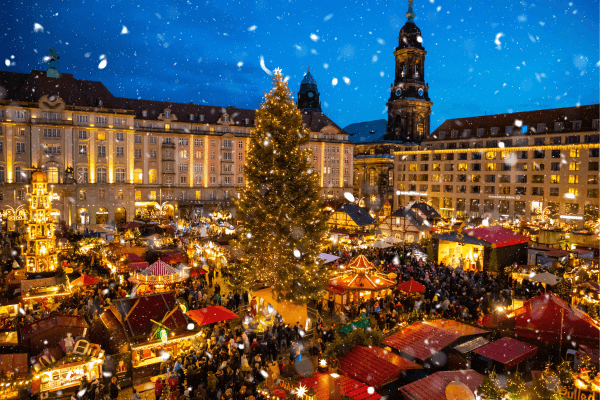
Part 1: The "Big 3" (Classics for a Reason)
If you are coming from the US or Asia, you probably want to see the famous ones. Here is what you need to know for the 2025 season.
1. Vienna, Austria (The Grand Dame)
2025 Dates: Nov 14 – Dec 26
The Vibe: Elegant, imperial, and slightly intimidating. The market at Rathausplatz is famous for its ice skating rink that winds through the park.
Slow Travel Tip: Skip the main market on Friday nights. Instead, go to the Spittelberg market. It’s tucked into narrow cobblestone streets, sells actual artisan goods (not plastic toys), and feels much more intimate.
2. Cologne, Germany (The Cathedral King)
2025 Dates: Nov 24 – Dec 23
The Vibe: awe-inspiring. The main market sits beneath the massive Gothic cathedral. It’s dark, moody, and smells of Lebkuchen (gingerbread).
Slow Travel Tip: Cologne gets insanely crowded. We recommend grabbing a Glühwein and walking down to the Harbour Christmas Market nearby. It overlooks the Rhine river and has a unique maritime theme (and fewer elbows).
3. Prague, Czech Republic (The Fairytale)
2025 Dates: Nov 29 – Jan 6
The Vibe: Medieval magic. The Old Town Square looks like a movie set.
Slow Travel Tip: Wake up early. Go to the market at 9:00 AM before the stalls fully open. You can get photos of the square without 5,000 people in them, then grab a coffee and watch the city wake up.
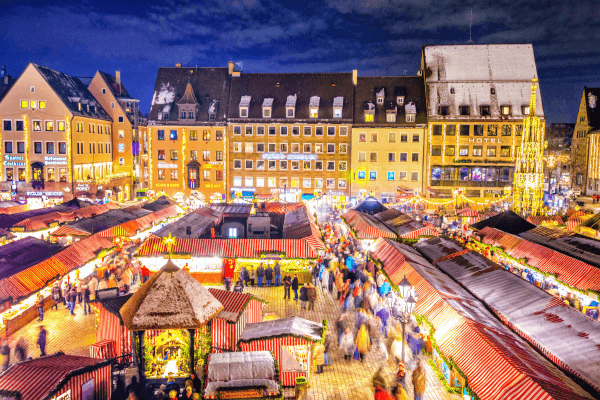
Part 2: The "Boffo" Choice (Our Alsace Road Trip)
Last year, we ignored the big capitals. We wanted to show Paul’s mom the storybook Europe without the stress of big city traffic. We chose Alsace, France, hugging the German border.
This region invented the Christmas market (Strasbourg’s dates back to 1570), and because the towns are so close together, it is the perfect "Slow Travel" loop.
The Base: Strasbourg
2025 Dates: Nov 27 – Dec 27
Our Take: We spent days just walking the Petite France district. The "Capital of Christmas" moniker is earned. The decorations aren't just lights; they are teddy bears and entire gingerbread houses strapped to the facades of buildings.
The Day Trips (Colmar & The Villages)
Instead of hotel-hopping, we stayed in one spot and took short day trips. This kept the stress low for Paul’s mom and let us actually enjoy the wine.
Colmar: Known for "Little Venice." It’s incredibly photogenic but best enjoyed mid-week.
Riquewihr & Kaysersberg: These were the highlights. Kaysersberg (only open Fri-Sun) is a medieval village nestled in vineyards. We found a small stall selling hand-painted ornaments that Paul’s mom loved.
Logistics: We utilized the Navettes de Noël (Christmas Shuttles). These buses run between the small villages, meaning you don't have to worry about parking or driving after a glass of hot wine.
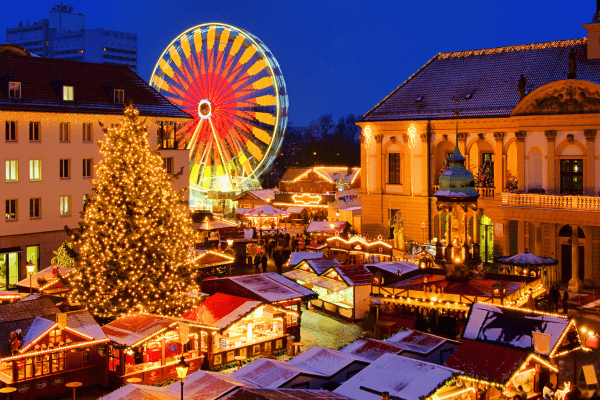
Part 3: The "Resident" Advantage
Why was that Alsace trip so relaxing? Because we didn't have a return ticket looming over our heads.
When you visit Europe as a tourist, you are constantly doing math: "We have 10 days, 3 cities, and $4,000 left."
When you live here as a resident (like we do in Spain), you stop "traveling" and start "living."
We booked flights last minute because we weren't worried about maximizing a 2-week vacation window.
We didn't rush because we knew we could come back next December.
We spent less because we know how to use local systems (like the Navettes) instead of expensive tour buses.
Does "Slow Travel" Sound Like a Dream?
It doesn't have to be just a vacation style. For many of us, it’s a lifestyle unlocked by getting legal residency in Europe.
If you want to know how we (and thousands of others) traded the 2-week vacation limit for a life of slow travel, we have broken down the first step: Getting into Spain.
Spain is the easiest gateway to EU life for many Americans and Brits. Once you are a resident here, the rest of Europe—including those Christmas markets—becomes your local playground.
[Download our FREE Spain Starter Kit here]
(It covers everything you need to get a clearer picture of your move to Spain and hopefully, you'll be sipping wine in Alsace by next Christmas.)
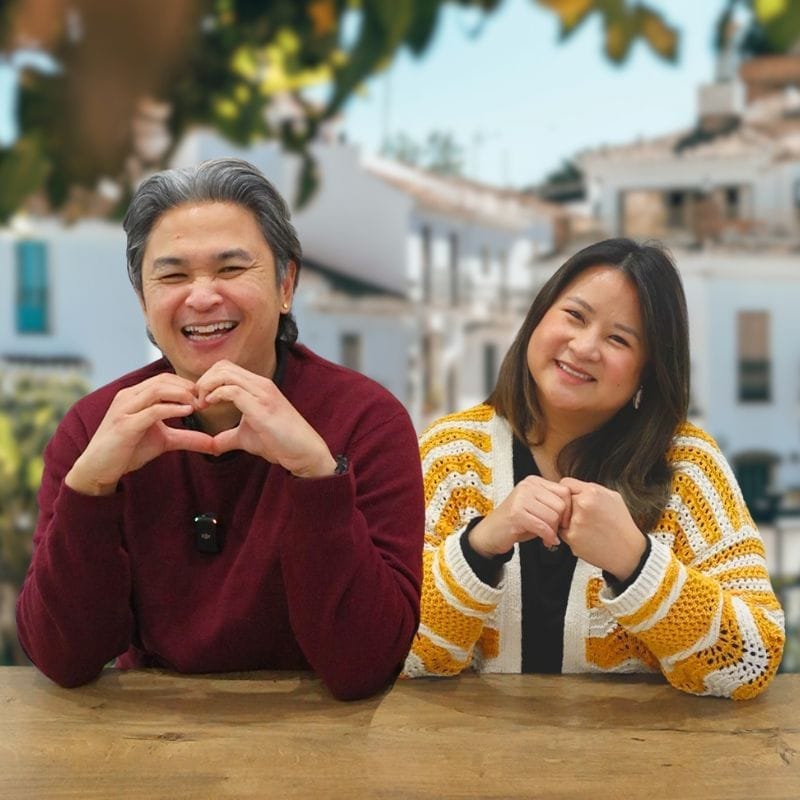
Hello, we're Bea and Paul…
...and we know exactly what it’s like to chase that better life. We spent 13 years working hard in Southern California, but after wrestling with one immigration hurdle after another, we realized that the "American Dream" wasn't quite working out for us. So, we sold everything, packed our bags, and moved to Spain—site unseen!
Our YouTube channel, Everything is Boffo (Life in Spain), tells the whole crazy story, from our first jamón to navigating our own residency here. We share the realities of life in Spain, the slow travel, the good food, and how we make it all happen.



Disclaimer: This content is provided for general informational and educational purposes only and should not be considered legal, financial, tax, medical, or immigration advice. Rules, visa requirements, housing regulations, tax obligations, and public services in Spain can change frequently and may vary depending on your nationality and personal circumstances. Always verify information with official government sources or qualified professionals before making decisions. Some links, resources, courses, consultations, and recommended services mentioned throughout our content may be affiliate partnerships, meaning we may earn a commission at no additional cost to you if you choose to use them. We only share resources, professionals, and services we genuinely trust or believe may be useful to our community. Any opinions expressed are our own and based on personal experience, research, interviews, and publicly available information at the time of publication.
Support from readers who use our links, courses, or resources helps us keep this information free, maintain the platform, and quite literally keep the lights on at home so we can continue producing guides like this for the community.
Newsletter
Subscribe now to get the latest updates.
Created with © systeme.io